On 16 September 2025, Bloomsbury Square hosted a momentous London debut as Victoria House opened its doors to the life science community.
Behind its Portland stone façade, the Grade II listed landmark has taken on a new starring role as the flagship for London life sciences. Completed in 1928 as the Liverpool Victoria Friendly Society headquarters, Victoria House has been reimagined with cutting-edge laboratories and collaborative spaces that combine heritage and ingenuity. From preserved Art Deco elements to precision-engineered research suites, every microscopic detail contributes to a space where the art of science truly comes to life.
The launch arrived against a national backdrop of concern over the UK’s ability to nurture breakthrough therapies, with big pharmaceutical companies either scrapping or pausing nearly £2bn in planned investments so far this year amid concerns that the UK government is not spending enough on new medicines.
Yet the atmosphere at Victoria House was resolutely confident and ambitious. The building – which was developed by Oxford Properties and Pioneer Group, converted by CW Architects and delivered by contractor Wates – represents a concrete commitment to the future of London life sciences: a place where ideas flourish, businesses scale, and discoveries with the potential to transform human and planetary health are realised.
Bridging the Capital Gap
Following a welcome address from the balcony overlooking the stunning atrium, guests gathered on Level 3 for a panel discussion centred on the new Henham Report, commissioned by Pioneer and The Crown Estate, titled: Bridging the Capital Gap for UK Research Commercialisation.
Chaired by Toby Reid, Executive Director at Pioneer, the panel included Steve Bates, CEO of BIA; Danuta Jeziorska, Founder of Nucleome Therapeutics; Robin Martin, Global Head of Investment Strategy at Legal & General; and Alex Hammacher from Oxford Science Enterprises. Together, they discussed the opportunities and challenges of increasing investment in pioneering science, focusing on pension funds’ potential role, scalable investment vehicles, and the importance of compelling investment narratives.
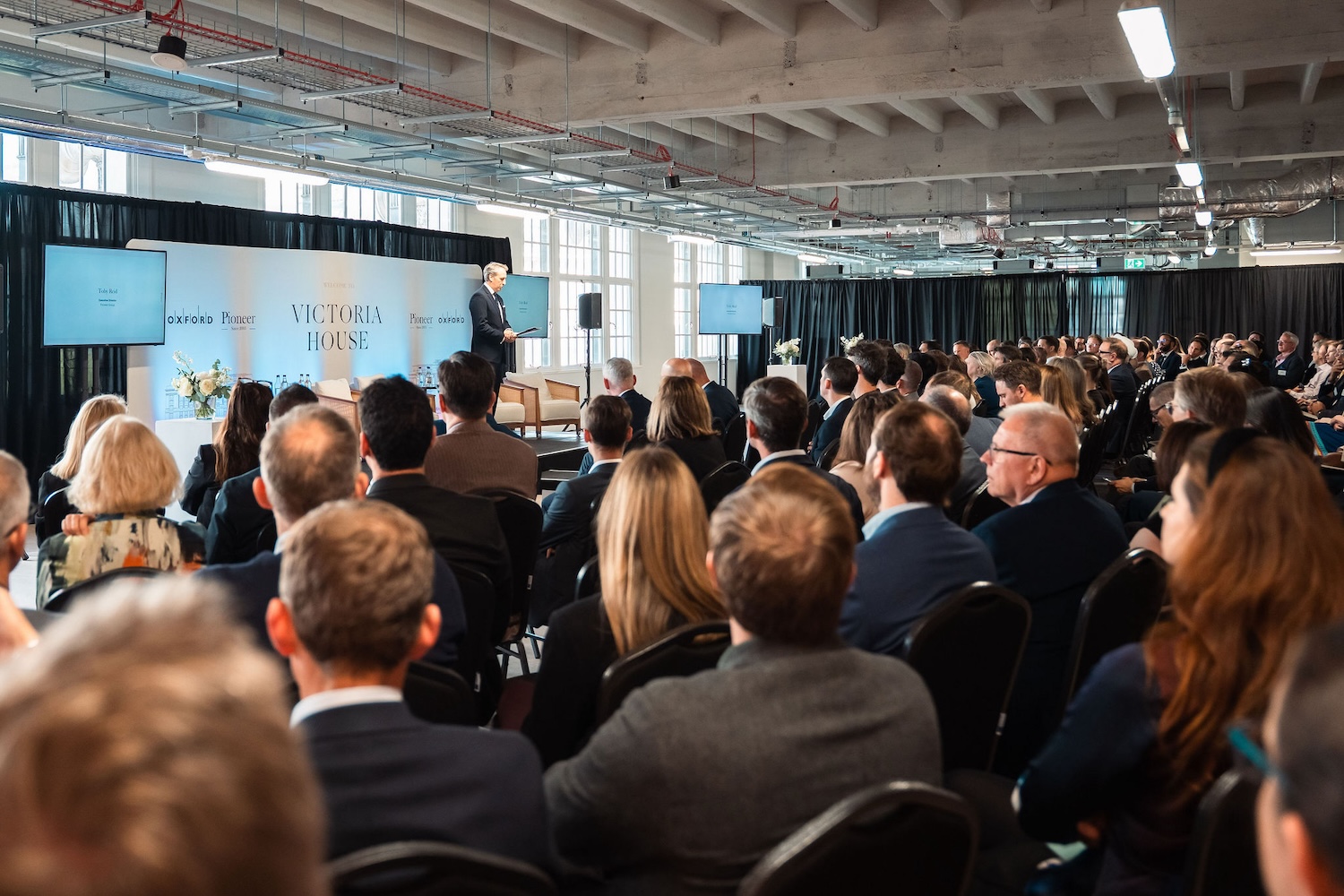
The panel also highlighted the critical role of infrastructure and collaboration between universities and venture capital to accelerate the translation of world-class research into successful spinouts, arguing that mobilising pension capital is essential to strengthen the nation’s life sciences ecosystem and realise the full potential of its research.
The Henham Report findings are striking; targeted investment of £15 billion over the next decade could unlock 1,771 additional spinouts, attract £27.4 billion in co-investment, and create around 56,000 skilled jobs. Toby Reid commented: “Through OSE-style interventions, there is great potential to more than double the number of spinouts the UK is producing. More capital distributed across the country would unlock commercialisation potential – generating high-growth companies and high-quality jobs across the nations and region.”
Stories of Discovery
The heartbeat of the afternoon was the Discovery Tour. After the panel discussion, more than 20 companies from across the wider Pioneer ecosystem showcased their work across four floors of Victoria House. Guests met the scientists and entrepreneurs shaping tomorrow’s breakthroughs and experienced their work first-hand.
From regenerative eye therapies to non-invasive precision medicine, the curated tour demonstrated the breadth of scientific progress taking place across the ecosystem, as well as the building’s potential as a vibrant centre for research and collaboration.
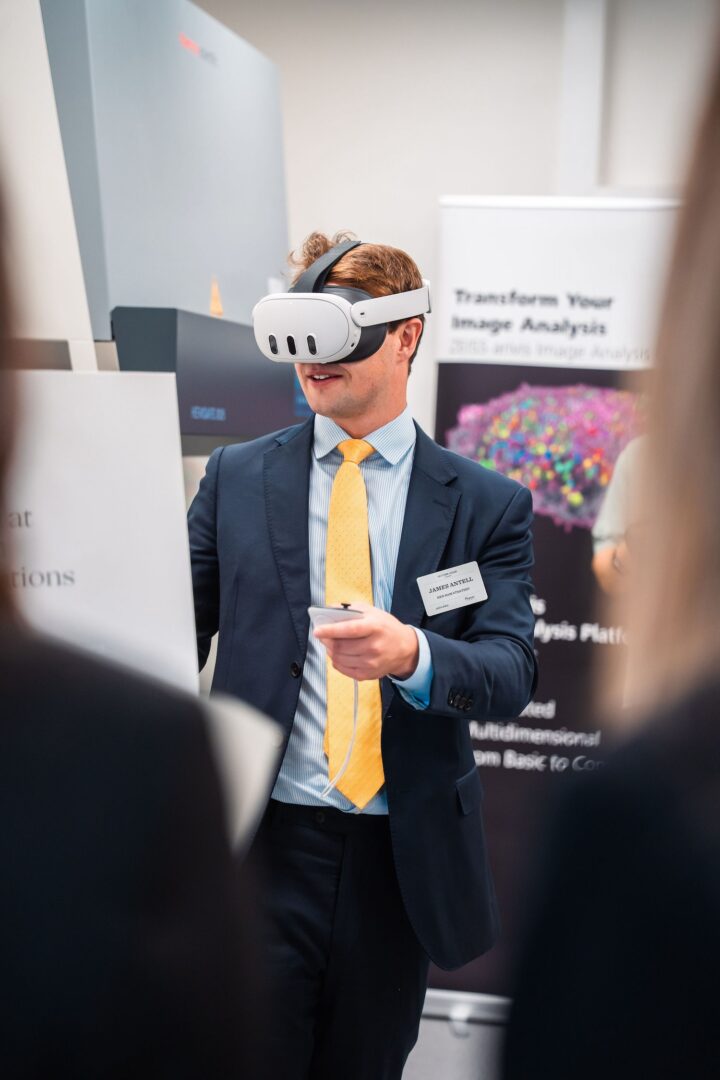
Exhibitors included: Forcefield, Maxwellia, PrecisionLife, ImmuOne, Pipeline Organics, BIA, Melio Bio, Microneedle Solutions, Nano Syrinx, Freenome, Selentus Science, Rinri Therapeutics, SurePulse, Nuna Bio, Neobe, Myconeos, Cytomos, Zeiss, Entelo Bio, Bio-Rad, Xterna, Avantgarde, Macias Sensors, Llusern and Locate Bio.
Read the stories of discovery here.
We were honoured to be joined by The Rt Hon. Baroness Northover and Lord Ranger of Northwood, who both sit on the House of Lords Select Committee for Science and Technology.
Baroness Northover said: “Life science hubs like Victoria House are vital for the UK. They provide the connections and collaboration that help companies scale, develop innovations from universities, and overcome challenges that arise as they grow. One thing we’re learning from examples in the US and elsewhere is the importance of hubs. People gain a huge amount from contact with others facing the same challenges. It’s incredibly welcome that Victoria House is being established, and I look forward to seeing the impact it will have.”
Lord Ranger added: “Life science hubs like Victoria House are a vital ingredient for the growth of the sector. They provide a place where people can come together, share ideas, and have like-minded conversations – something that is sometimes overlooked when we think about supporting business growth. It is fantastic to see this addition to the London ecosystem.”
The Opening Act
The official launch of Victoria House was the opening act. We look forward to watching the ecosystem take centre stage, seeing connections forged here evolve into collaborations, and witnessing Victoria House become a backdrop for discovery.
Want to be part of the journey?
Together, we’re building a community that shapes the future of global science.